Breaking the Plateau: How I Upgraded My Practice from "Relaxation" to "Remediation"Review: Dynamic Myofascial Release Course at RSM International Academy
After being in the industry for a few years, you hit a point where the initial excitement fades, and you start noticing the limitations of your training. I had my regulars, I knew my routine, but I was frustrated. I had clients with recurring issues—chronic tightness, limited range of motion—that my standard deep tissue work just wasn’t fixing permanently.
I enrolled in the Dynamic Myofascial Release Course at RSM International Academy hoping to find the missing piece. I had already done their Trigger Point module, so I knew the quality would be good, but I wasn't expecting this training to completely overhaul my understanding of the body. It bridged the gap between being a "massage therapist" and becoming a true soft-tissue clinician.
Seeing What Lies Beneath
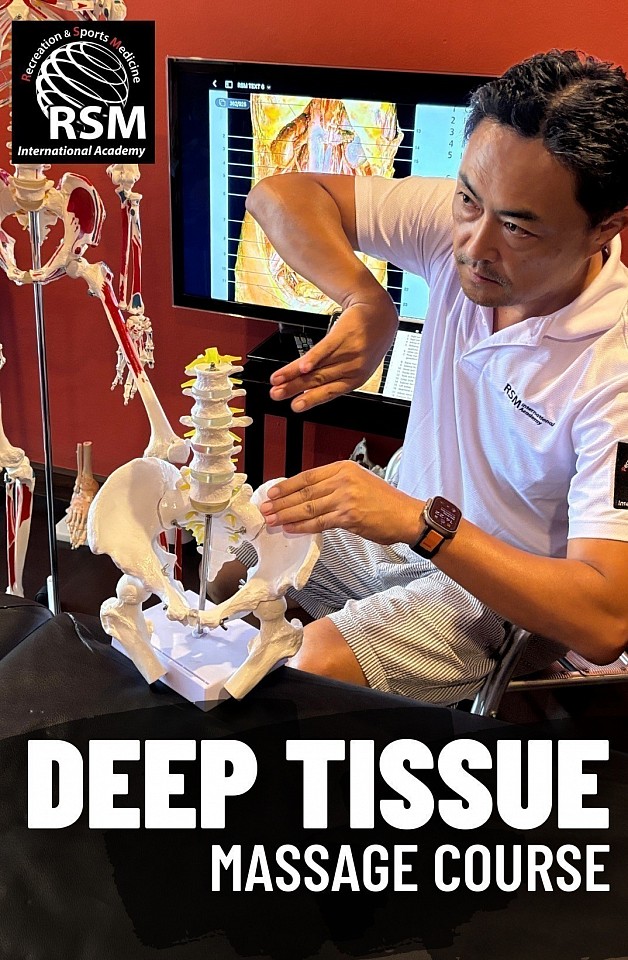
At the 3-year mark, we think we know anatomy. But Hironori Ikeda (MSc Sports Medicine) showed me I was only scratching the surface. The course utilized high-resolution cadaver images and layered diagrams that were lightyears ahead of standard massage school textbooks.
For the first time, I truly understood how to identify fascial restrictions versus simple muscle tightness. We watched video evidence of how deep fascia separates into sliding layers and how it wraps around nerves. This visual reinforcement was crucial. It turned "fascia" from a buzzword into a tangible structure I could assess and treat with intent.
Moving Beyond the "Rub and Hope" Method
The biggest shift for me was understanding the difference between massage and myofascial release. In my first few years, I treated everything by pressing harder or rubbing faster. This course taught me that force isn't the answer—glide is.
We learned "Dynamic Myofascial Release," a system that integrates movement with touch to restore the sliding capacity of tissues. This was a game-changer for my practice. Instead of just mashing on a tight spot, I learned to re-establish the nerve glide and free intermuscular adhesions. It made my work significantly more efficient and less taxing on my hands.
Tackling Stubborn Pain Patterns
The curriculum was packed with solutions for the exact complaints I see on my table every day. We didn't just learn general techniques; we learned specific protocols for myofascial release for chronic pain.
For example, I finally learned a reliable approach to myofascial release for back pain that addresses the thoracolumbar junction and hip rotators rather than just rubbing the sore lower back. We even covered specialized areas like myofascial release for jaw tension, which has been a huge value-add for my clients suffering from stress headaches and TMJ issues—something I was previously afraid to touch.
Why "Just Stretch" Doesn't Work
One of the most validating parts of the course was the section on myofascial release vs traditional stretching. I used to get frustrated when clients would stretch religiously but see no improvement.
Ikeda Sensei explained the biomechanics: if the deep fascia is adhered or a nerve is trapped in fibrosis, static stretching can actually irritate the tissue. We learned to release the restriction first. The effects of myofascial release on flexibility were instant and undeniable. Seeing a classmate gain 20 degrees of hip rotation in under a minute proved that I had been doing it backward for years.
A New Standard of Professionalism
The course environment is intense but incredibly rewarding. You are learning alongside physiotherapists and sports trainers, which pushes you to step up your game. The instruction is precise, rooted in 25 years of sports medicine experience, and leaves no room for guesswork.
If you are feeling stuck in your career or tired of giving the same old routine, this advanced myofascial training is the reset you need. It took me from feeling like a technician who follows a sequence to a practitioner who understands the "why" behind every restriction. It’s the essential skill set for modern rehabilitation and sustainable practice.